After surviving a STEMI heart attack, you become far more aware of your body, every symptom, every change, every unexpected issue. One thing many heart attack survivors experience, but don’t always talk about, is frequent nosebleeds caused by a dry nose, especially when taking heart medications such as antiplatelets or blood thinners.
While nosebleeds are usually minor, they can feel particularly worrying when you’ve already faced a life-threatening cardiac event. The good news is that most nosebleeds in STEMI survivors are preventable with the right approach.
Why STEMI Survivors Are More Prone to Nosebleeds
For many of us who’ve survived a STEMI, nosebleeds aren’t random. They’re often caused by a combination of:
- Blood-thinning or antiplatelet medication (such as aspirin or similar drugs)
- Dry nasal passages, especially in heated or air-conditioned environments
- Reduced nasal healing due to fragile blood vessels
When the inside of the nose dries out, tiny blood vessels can crack easily. Add blood-thinning medication into the mix, and even a small split can bleed more than expected.
What to Do If a Nosebleed Starts
If you get a nosebleed, try not to panic, stress isn’t good for your heart or your blood pressure.
- Sit upright and lean forward – Never tilt your head back.
- Pinch the soft part of your nose just below the bridge for a full 10–15 minutes.
- Breathe through your mouth and stay still.
- Apply a cold compress to the bridge of your nose if needed.
- Once it’s stopped make a record of how long it lasted, how severe it was and the date & time (might be useful for your doc.)
- Avoid Sneezing or Blowing Your Nose, Give your nose time to clot naturally.
If bleeding is heavy, lasts longer than 20 minutes, or keeps recurring, seek medical advice, especially as a STEMI survivor.
Preventing Dry Nose and Nosebleeds After a Heart Attack
Prevention is where you can really make a difference.
Keep the Air Moist
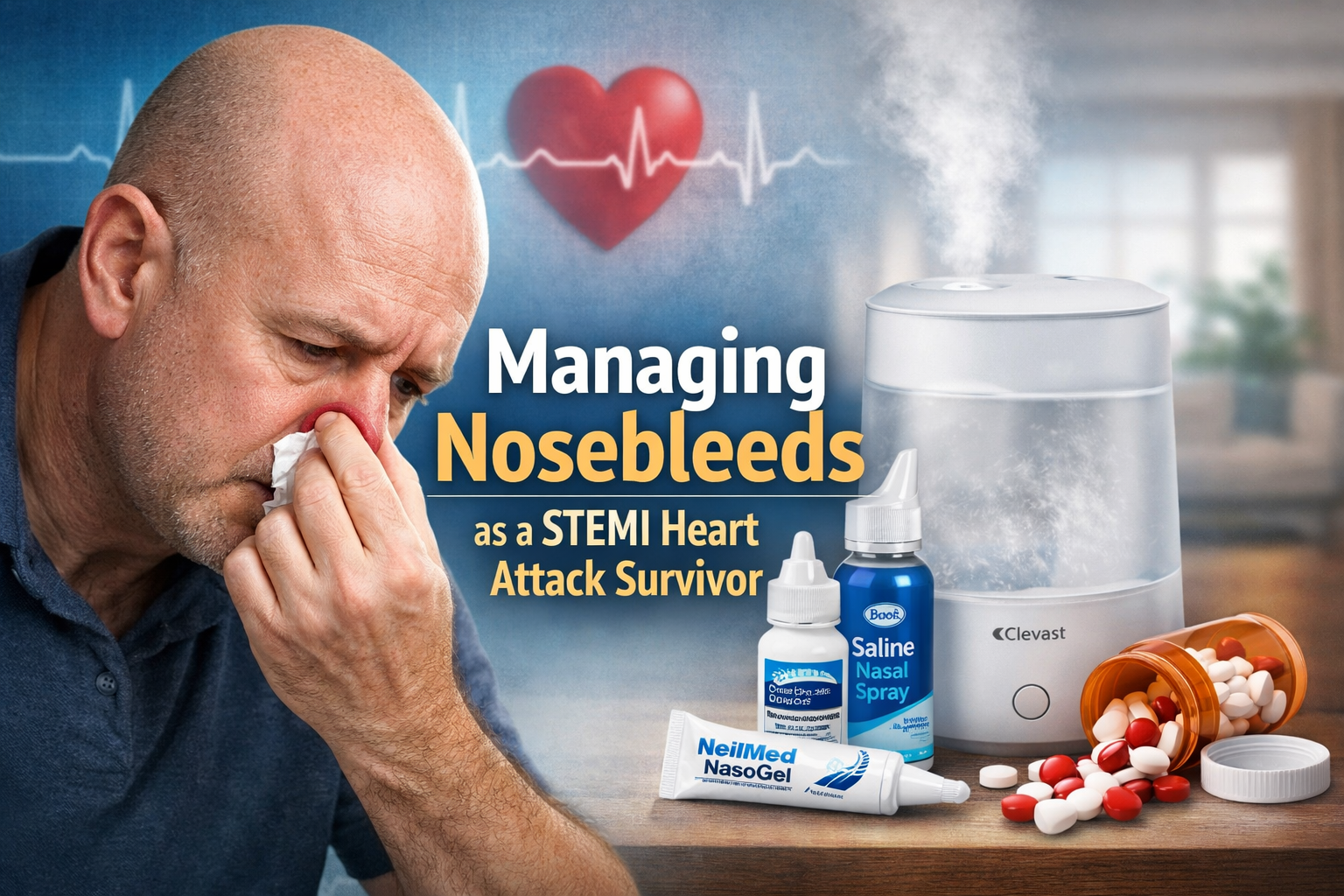
Dry indoor air is one of the biggest triggers. I’ve been using the Clevast Smart Humidifier (CL-HD001), and it’s genuinely helped keep my nasal passages comfortable.
It’s a solid device overall, though I should mention that sometimes the automated schedule doesn’t turn the humidifier on as planned. When that happens, the app sends a notification, so I’m aware straight away and can switch it on manually. Despite that minor issue, it’s been a big positive for managing dryness and reducing nosebleeds.
Moisturise the Inside of the Nose
This has become part of my daily routine:
- Boot Saline Nasal Spray – Keeps the nasal lining hydrated and helps prevent cracking.
- NeilMed NasoGel – Adds an extra layer of protection by coating the inside of the nose and locking in moisture.
Used consistently, these have made a noticeable difference.
Extra Advice for STEMI Survivors
- Stay well hydrated, dehydration worsens dryness.
- Avoid forceful nose blowing or picking.
- Use soft tissues only.
- Aim for an indoor humidity level of 40–50%.
- Always discuss persistent bleeding with your GP or cardiology team.
Living Carefully, Not Fearfully
Surviving a STEMI changes how you see health issues — even something as “small” as a nosebleed can feel frightening. But in most cases, these nosebleeds are simply a side effect of dry nasal passages combined with life-saving heart medication.
With the right humidity, nasal care, and awareness, nosebleeds don’t have to control your confidence or peace of mind. For me, the combination of the Clevast Smart Humidifier, Boot Saline Nasal Spray, and NeilMed NasoGel has helped me feel more comfortable and more in control.
If you’re a fellow STEMI survivor dealing with the same issue, you’re not alone, and there are practical ways to manage it safely.